
The Museum is closed for the season and will reopen Saturday, May 23.
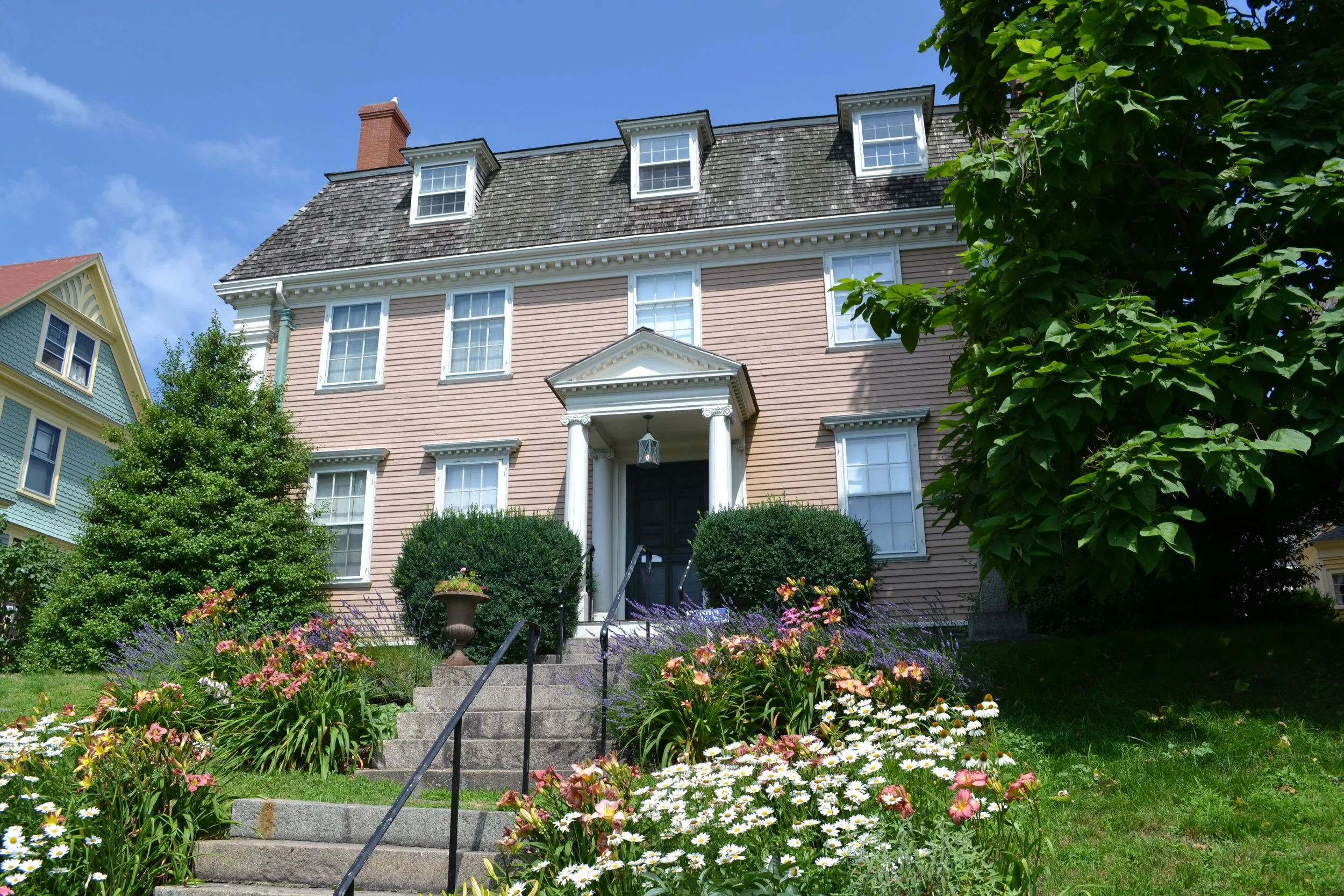
TOUR ONE OF GLOUCESTER’S HISTORIC HOUSES, OPEN SUMMER AND FALL WEEKENDS.
LEARN ABOUT JUDITH SARGENT MURRAY, AN 18TH CENTURY ADVOCATE OF WOMEN’S EDUCATION AND EQUALITY
COLLECTIONS INCLUDE ARTWORK BY JOHN SINGER SARGENT AND HIS SISTER, EMILY

Judith Sargent Murray’s (1751-1820) Accomplishments (partial list)
Extraordinarily progressive early advocate for women’s equality and potential.
Multi-genre author of poems, plays, essays, a novel, and a biography (co-author).
Met George and Martha Washington at the Presidential Mansion in New York City on August 9, 1790.
Founding member of the first Universalist church in America (1779).
Wrote the first American Universalist catechism (1782).
First American to have plays performed in the Boston’s Federal Street Theatre:
The Medium; or Virtue Triumphant, March 2, 1795;
The Traveller Returned March 9-10, 1796.
First American woman to have a regular column (actually two columns) in an American magazine/newspaper

John Murray’s (1741-1815) Accomplishments (partial list)
Father of Organized American Universalism.
September 1770: John Murray arrives off the coast of Good Hope, New Jersey, meets Thomas Potter and reluctantly agrees to preach in Potter’s small church; first Universalist sermon given in America on September 30, 1770.
Served as a chaplain in the Rhode Island Brigade in the Continental Army, September-December 1775, during the Siege of Boston; George Washington supported his appointment.
In September 1775 and, perhaps, on March 9, 1776, Murray dined with Washington in his headquarters on Brattle Street in Cambridge MA.
First minister of the first Universalist Church in America, Gloucester, 1779-93.
Known as “Salvation Murray” to distinguish himself from another minister named John Murray who was nicknamed “Damnation Murray.”
Named litigant in Murray vs. Citizens of Gloucester, which established the principle of the separation of church and state, 1783-86.
Participated in the first general Universalist Convention in Oxford, Massachusetts, September 1785.
Helped organize and was a leading participant in the General Convention of Universalists in Philadelphia, May 25-June 8, 1790, which adopted the Articles of Religion, Plan of Church Government and Circular Letter.
This convention passed the first denominational resolution against slavery. It called the practice "inconsistent with the union of the human race in a common Savior" and recommended "gradual abolition."
First minister of the First Universalist Society of Boston, 1793-1809.